

🧪 Cell-Free Food Manufacturing – The Next Leap Beyond Fermentation
Share
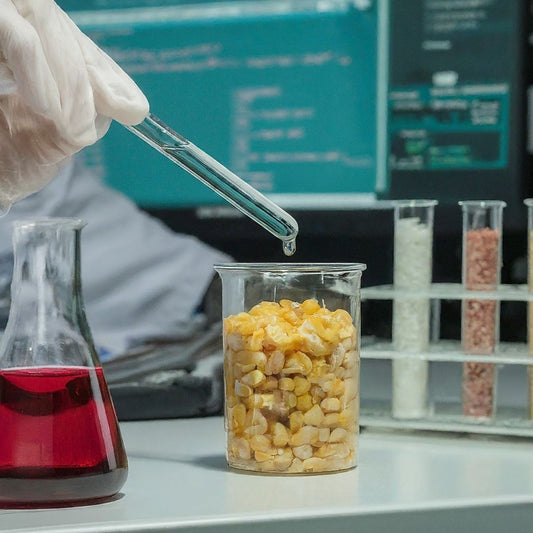
Cell-free food manufacturing is an emerging food technology where proteins, enzymes, fats, and functional food ingredients are produced without growing living cells. Instead of cultivating microbes or animal cells, this approach uses the cell’s internal machinery (enzymes and ribosomes) outside the cell to directly make food compounds.
Think of it as using the factory inside the cell—without the cell itself.
🔬 How It Works (Simplified)
Cells are broken open to extract their productive machinery
Enzymes and ribosomes are isolated
Controlled biochemical reactions occur in a cell-free system
Target food molecules are synthesized directly
This avoids energy loss, contamination risk, and slow cell growth.
🍽️ What Can Be Produced
Dairy proteins (whey, casein)
Egg proteins (ovalbumin)
Food enzymes (rennet, lactase, amylase)
Natural flavor molecules (vanillin, esters)
Functional peptides & nutraceuticals
🏭 Real-Time & Emerging Examples
Imagindairy (Israel): Developing animal-free dairy proteins using advanced cell-free and fermentation hybrid systems
Triton Algae Innovations: Researching rapid protein synthesis platforms
Academic food biotech labs: Producing enzymes on-demand for food processing
(Most cell-free food systems are currently at pilot or R&D scale.)
🌍 Why This Technology Matters
⚡ Faster production than fermentation
💧 Lower water and energy use
🧬 High precision with minimal by-products
🌱 No animals, land, or antibiotics
🧼 Cleaner processing & easier purification
⚠️ Current Challenges
High cost of enzyme extraction
Scaling from lab to industry
Regulatory approval for food use
Limited commercial adoption (yet)
🚀 Future Applications
On-demand protein manufacturing
Space & disaster-relief food systems
Decentralized food micro-factories
Ultra-clean, allergen-free ingredients
Precision nutrition & medical foods